
Pork Temperature Guide
Why 145°F is the number now, and when to cook pork well past it.
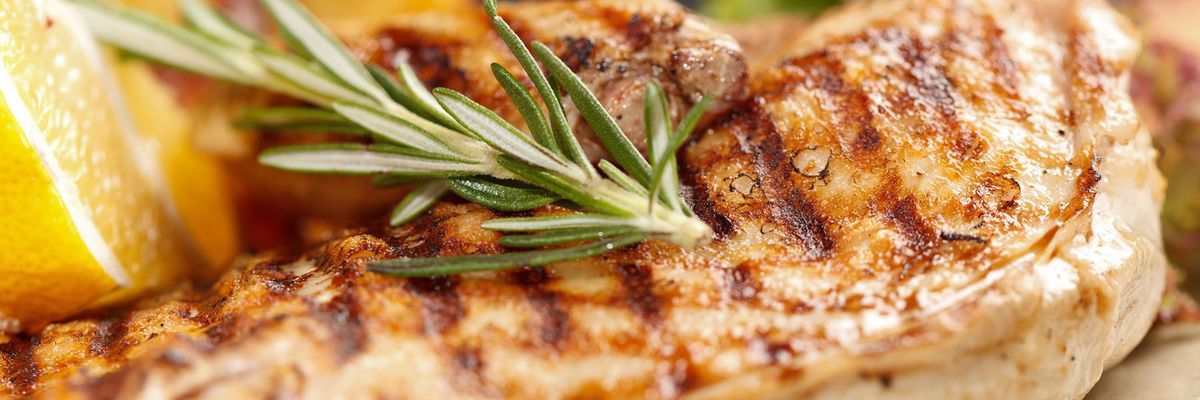
If you learned pork from your parents or an older cookbook, you probably learned to cook it until it was white all the way through. That made sense once. It doesn't anymore, and it's the main reason pork chops have a reputation for tasting like a shoe. This guide covers the current safe temperature, what pink pork means, cooking times for the common cuts, and the cuts where "safe" is only the starting line.
Safe temperature: 145°F plus a 3-minute rest
USDA's safe minimum for whole cuts of pork (chops, tenderloins, loin roasts, shoulder roasts and fresh ham) is 145°F, then at least 3 minutes of rest. During the rest the temperature holds or keeps climbing, which finishes the job on the bacteria.
Ground pork and fresh sausage are a different story. Like any ground meat, they need 160°F, because grinding mixes the surface bacteria through the whole batch.
What changed in 2011
For decades the official number for pork was 160°F. In 2011 USDA lowered it to 145°F with a 3-minute rest, which put pork in line with beef, veal and lamb. The old, higher number dates from when trichinosis, a parasitic infection, was a real risk from commercial pork. Changes in how hogs are raised and fed have made it rare in U.S. pork; most of the remaining cases trace back to wild game like bear and boar.
Pink pork is fine
A chop cooked to 145°F usually has a blush of pink in the middle, and that's normal. USDA notes that cooked, uncured red meats, pork included, can stay pink after they've reached a safe temperature. Color tells you nothing in either direction. Cured pork like ham is pink for a different reason (the curing salts) and stays pink no matter how long you cook it.
Cooking times by cut (USDA chart)
| Cut | Weight | Oven | Time |
|---|---|---|---|
| Loin roast, bone-in or boneless | 2 to 5 lb | 350°F | 20 min/lb |
| Crown roast | 10 lb | 350°F | 12 min/lb |
| Tenderloin | ½ to 1½ lb | 425–450°F | 20 to 27 min total |
| Boston butt | 3 to 6 lb | 350°F | 45 min/lb |
| Ribs | 2 to 4 lb | 350°F | 1½ to 2 hours, or until fork tender |
Pork chops
Chops aren't on USDA's roasting chart because most people cook them on the stove or grill. Typical times over medium-high heat are about 6–8 minutes total for a ¾-inch chop, 8–12 for 1 inch, and 12–16 for 1½ inches, flipping once or twice. Thin chops dry out fast, so if you have the choice, buy them thick, sear them, and pull them right at 145°F. A quick brine (a few tablespoons of salt dissolved in a quart of water, 30 minutes to a few hours in the fridge) helps them stay juicy.
Tenderloin
Pork tenderloin is lean, small and quick: 20 to 27 minutes at 425–450°F per USDA. Sear it first in an oven-safe pan, then finish it in the oven, and you get a browned crust. Check it at the thick end, and expect the skinny tail to run hotter.
Ham: fresh, cooked and country
Ham labels are confusing, because "ham" can mean raw meat, fully cooked meat that only needs warming, or a dry-cured country ham. The label tells you which, and that decides the temperature you're aiming for.
| Type | Weight | Time | Target |
|---|---|---|---|
| Smoked ham, cook before eating, whole, bone-in | 10 to 14 lb | 18 to 20 min/lb | 145°F + rest |
| Smoked ham, cook before eating, half, bone-in | 5 to 7 lb | 22 to 25 min/lb | 145°F + rest |
| Fresh ham, uncooked, whole leg, bone-in | 12 to 16 lb | 22 to 26 min/lb | 145°F + rest |
| Fresh ham, uncooked, whole leg, boneless | 10 to 14 lb | 24 to 28 min/lb | 145°F + rest |
| Fully cooked ham, whole, bone-in (reheat) | 10 to 14 lb | 15 to 18 min/lb | 140°F |
| Fully cooked ham, half, bone-in (reheat) | 5 to 7 lb | 18 to 24 min/lb | 140°F |
| Spiral-cut, fully cooked, whole or half (reheat) | 7 to 9 lb | 10 to 18 min/lb | 140°F |
The 140°F reheating number applies to fully cooked hams packaged in USDA-inspected plants. Any other cooked ham, and leftover ham, should go to 165°F. Spiral-cut hams dry out fast because all those slices expose a lot of surface, so wrap it tight in foil or use a covered pan.
When "safe" isn't "done": shoulder and ribs
Some pork cuts are safe at 145°F and nowhere near ready to eat. Pork shoulder (sold as Boston butt or picnic) and ribs are loaded with collagen, the connective tissue that makes meat tough. Collagen starts breaking down into gelatin once the meat climbs well above 160°F, and it keeps going for hours. That's what turns a tough shoulder into pulled pork.
- Sliced pork shoulder: safe at 145°F, but chewy. 180–190°F slices tender.
- Pulled pork: 195–205°F, and probe-tender: a thermometer slides in like it's going into soft butter.
- Ribs: safe at 145°F, tender around 190–203°F. Pick up the rack with tongs in the middle; if it bends and the surface cracks, it's ready.
The BBQ and smoking guide covers low-and-slow pork shoulder and ribs in detail, including the stall that catches every first-timer.
Common mistakes
- Cooking chops to 160°F out of habit. That's the old number, and it costs you most of the juice. Pull at 145°F.
- Skipping the rest. The 3 minutes is part of USDA's safety standard. It's there for a reason.
- Treating sausage like a chop. Fresh sausage is ground meat. It needs 160°F.
- Pulling a shoulder at 165°F. Safe, and tough as a boot. Low-and-slow cuts need time past safe.
- USDA Food Safety and Inspection Service, Safe Minimum Internal Temperature Chart
- FoodSafety.gov, Meat and Poultry Roasting Charts (meat and ham charts)
- Tenderness temperatures for shoulder and ribs are common barbecue practice, not a USDA standard.